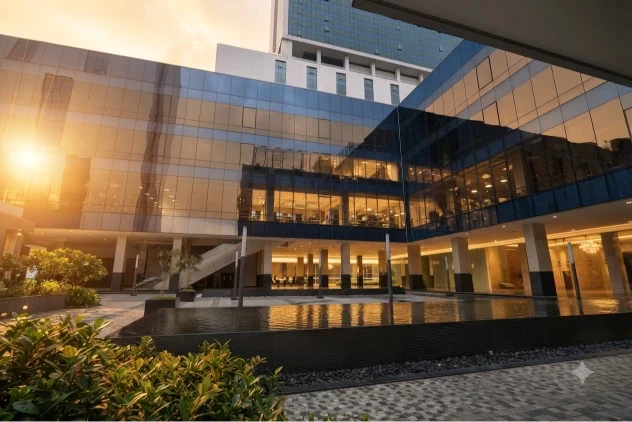
How IT Parks in Kerala Are Attracting Global Capability Centres (GCCs)
How Kerala's Growing IT Infrastructure Is Positioning Its Tech Parks as the Next Big Destination for Global Capability Centres
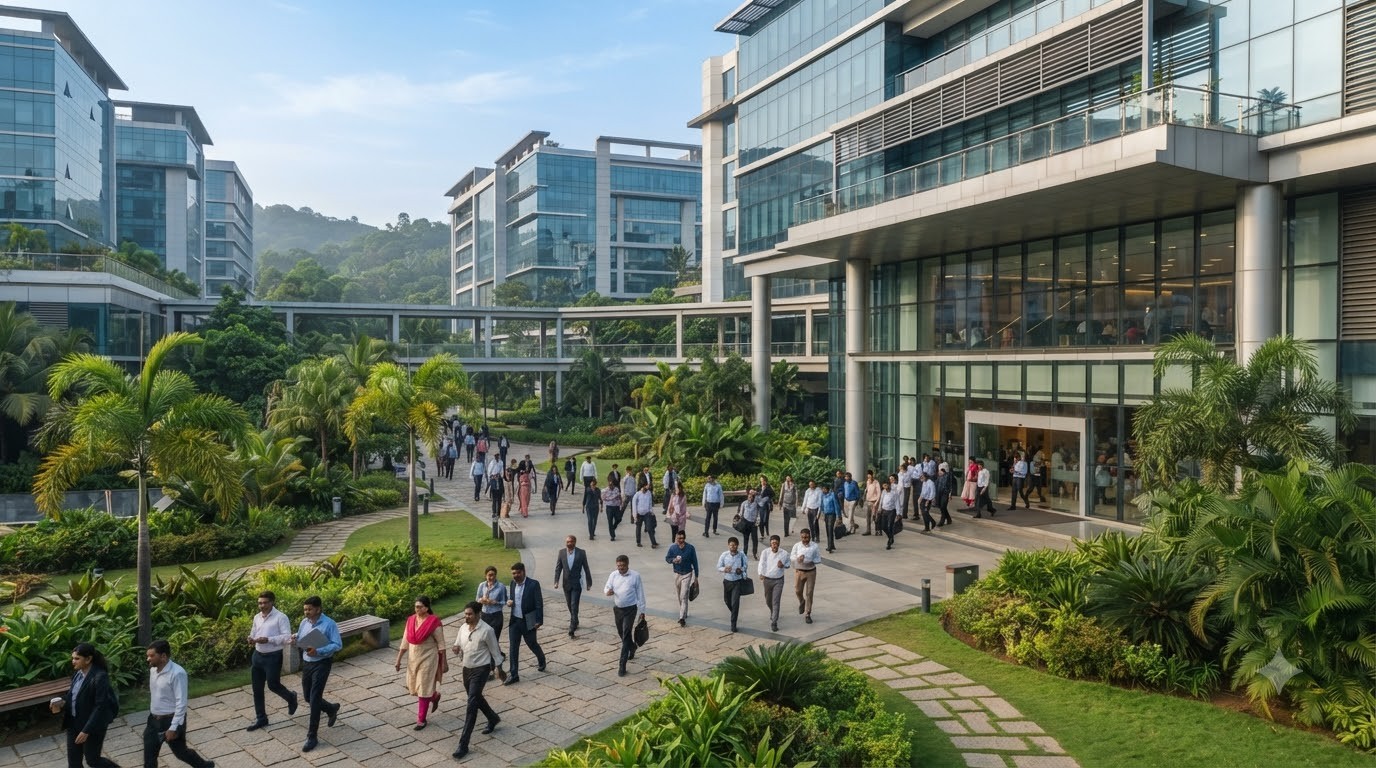
A few years ago, Global Capability Centres, the in-house offshore units multinational companies set up to handle everything from engineering to finance to customer operations, were almost exclusively a Bangalore, Hyderabad, or Pune story. That's changing. IT Parks in Kerala are increasingly showing up on the shortlist when global companies decide where to open their next GCC, and it's worth understanding why.
What's Driving GCCs to Look Beyond the Usual Metros
GCCs used to cluster in three or four cities where the infrastructure and talent already existed. But as those metros have gotten more expensive and more competitive for hiring, companies have started looking at Tier 2 options that offer similar quality without the same cost pressure. Kerala, and specifically its Tech Parks, has quietly become one of the stronger alternatives in that conversation.
Real estate costs matter here, but they're not the only factor. Attrition rates in saturated metro job markets have pushed companies to look for locations where they can build a stable, loyal workforce rather than compete endlessly for the same talent pool.
Why Kerala's IT Parks Specifically
A steady, high-quality talent pipeline. Kerala has one of the highest literacy rates in India and a dense network of engineering and management colleges producing graduates every year. For a GCC that needs a consistent flow of skilled hires in software development, analytics, or finance operations, that pipeline is a real advantage, and it's a big part of why any tech hub in Kerala tends to hold onto talent better than markets where competition for the same graduates is far more intense.
Lower attrition compared to saturated markets. Employees in Kerala's IT parks often stay closer to home, which tends to translate into longer tenures and lower turnover. For GCCs, where institutional knowledge and process continuity matter a lot, that stability is worth more than it might look on paper.
Government incentives and policy support. Kerala's IT policy has actively pushed to position the state's tech parks as investment-ready destinations, with incentives around land, power, and setup costs that make relocation financially attractive for large occupiers.
Infrastructure that meets global standards. The newer IT Parks in Kerala, and the Tech Parks in Kerala more broadly, aren't scaled-down versions of what's available elsewhere. Facilities like Infopark Kochi and Technopark Trivandrum have built out Grade A office infrastructure, high-speed connectivity, and large floor plates specifically designed to accommodate the scale a GCC operation needs from day one.
What GCCs Actually Look For
Global Capability Centres tend to be far more particular about their real estate than a typical startup or mid-sized company, simply because of the scale involved. A few things consistently come up in site selection:
- Large, contiguous floor space that can house hundreds or thousands of employees under one roof
- Reliable power backup and IT infrastructure redundancy, since downtime is rarely acceptable
- Proximity to talent, meaning nearby universities and residential catchments
- Strong connectivity, including airport access for leadership travel and client visits
- A regulatory and tax environment that makes long-term investment predictable
Kerala's leading IT parks have been steadily building toward exactly this profile, which is a big part of why they're starting to appear on GCC shortlists that would once have skipped the state entirely.
Kochi's Growing Role in the GCC Conversation
Within Kerala, Kochi has emerged as the strongest pull for this kind of investment. Its combination of IT infrastructure, connectivity through the international airport, and a business environment shaped by Smart City Kochi and Infopark has made it the city most GCCs evaluate first when they consider the state. As more established multinationals set up operations there, it reinforces Kochi's position as the state's leading it hub in Kerala, which in turn makes it easier for the next company to justify the same move.
What This Means for Kerala's Commercial Real Estate Market
The GCC trend has a direct effect on demand for office space across Kerala's IT parks. Large-format leasing, once rare outside a handful of metro cities, is becoming more common as these centres scale their operations. Developers and landlords near established tech parks have responded by upgrading building specifications and expanding available inventory, anticipating that this demand isn't a short-term spike.
For businesses and investors watching Kerala's commercial real estate market, this shift is worth paying attention to. IT Parks in Kerala are no longer just regional tech hubs serving local IT companies. They're becoming genuine contenders in the national conversation about where global companies choose to build their next major operations centre, and that shift is likely to keep shaping demand for premium office space across the state in the years ahead.
Related Blog
















69d8c098183eb.jpg)




699d25acafc91.jpg)






693fd66242110.jpg)
693be91f9e848.jpg)
693c018309eb3.jpg)
693fc7984290e.jpg)

693c0b5f9fd15.jpg)


693fe8574c696.jpg)
693bf3d581e17.jpg)
693fd05d8e2b2.jpg)