
Can Kids Learn Malayalam Fluently Through Online Classes?
A Complete Guide to Online Language Learning for Children
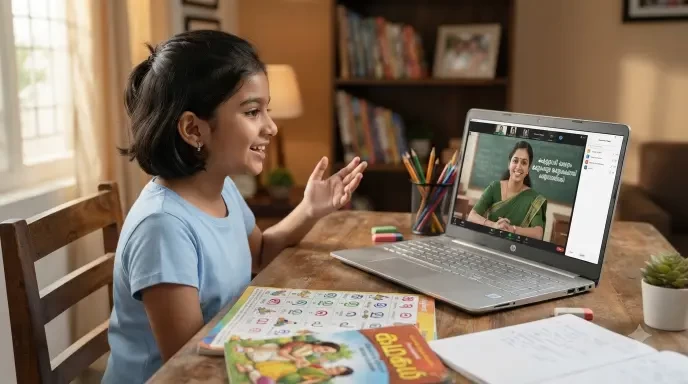
As a Malayalam tutor, one question I hear from parents again and again is, “Can my child really learn Malayalam fluently through online classes?” My answer is yes—but with one important condition: online Malayalam learning should be more than simply sitting in front of a screen and memorising words.
I have seen children begin with just a few Malayalam words and gradually become comfortable reading, writing and speaking the language. For children growing up outside Kerala, especially NRI children, online Malayalam classes can actually be a practical way to maintain a connection with their mother tongue.
Today, online Malayalam learning is increasingly designed around live interaction, personalised lessons, stories, games, pronunciation practice and real conversations rather than traditional textbook-only teaching.
What Does Malayalam Fluency Actually Mean for a Child?
Before talking about fluency, I always encourage parents to understand what they expect from their child.
For a young learner, fluency does not necessarily mean speaking Malayalam exactly like a native adult. I consider a child to be progressing well when they can understand everyday Malayalam, respond naturally, form simple sentences, express their thoughts, read age-appropriate Malayalam and gradually write with confidence.
For an NRI child, being able to speak with grandparents, understand conversations during family visits to Kerala, participate in cultural activities and feel comfortable using Malayalam is already a meaningful achievement.
That is why I prefer setting realistic milestones rather than expecting a child to become fluent within a few weeks.
Why Online Malayalam Classes Can Work So Well
One of the biggest advantages I see with online Malayalam classes for kids is convenience.
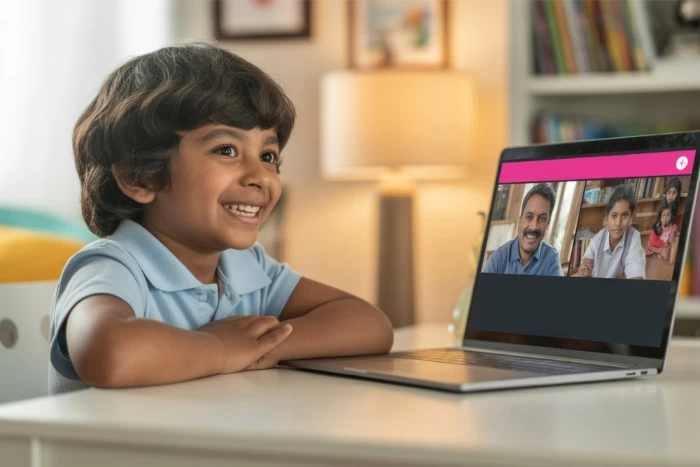
A child living in Dubai, Abu Dhabi, Doha, London, Toronto or Melbourne does not need to find a Malayalam teacher nearby. They can learn Malayalam from a qualified tutor from the comfort of their home.
But convenience alone does not create fluency.
The real difference comes from how the classes are conducted.
In my classes, I try to make children speak from the beginning. Instead of simply asking them to repeat vocabulary, I might ask, “What did you eat for breakfast?” or “Tell me about your favourite game.”
Even if the child initially answers in English, I gradually introduce Malayalam words and sentences into the conversation.
This makes spoken Malayalam learning feel natural rather than like another school subject.
Children Learn Better When Malayalam Feels Fun
I have noticed that children rarely dislike a language itself. What they dislike is feeling that learning it is difficult or boring.
That is why I use stories, pictures, simple conversations, games, songs, activities and everyday examples whenever possible.
For example, instead of teaching a list of food-related Malayalam words, I might create a small conversation around a child's favourite food.
Instead of asking them to memorise ten verbs, I may ask them to describe what they did that morning.
This type of interactive Malayalam learning gives children a reason to use the language.
Modern online Malayalam learning is also moving towards interactive activities, audio-based practice, stories, games and pronunciation support, particularly for children growing up outside Kerala.
Online Malayalam Learning Is Especially Useful for NRI Children
As a tutor, I think this is one of the biggest opportunities for online Malayalam education.
Many NRI children hear Malayalam at home but mainly communicate in English at school and with friends. As a result, they may understand what their parents or grandparents say but struggle to respond in Malayalam.
This is extremely common.
I don't see this as a weakness. The child already has an important foundation—they are listening to the language regularly. What they need is structured practice and encouragement to start producing it themselves.
Online Malayalam classes for NRI kids can provide that missing structure.
A child can practise speaking with a Malayalam tutor, improve vocabulary, learn Malayalam reading and writing, and gradually develop confidence without feeling embarrassed about making mistakes.
Reading and Writing Matter Too
When parents tell me they want their child to become fluent, I always ask them not to focus only on speaking.
Speaking is important, but Malayalam reading and writing give children a much stronger connection with the language.
Learning the Malayalam alphabet, recognising letters, reading simple words and eventually forming sentences takes consistent practice.
I usually recommend starting with small goals. A child does not need to read an entire Malayalam storybook on the first day. Even reading a few words correctly can be a great first milestone.
Once children start recognising Malayalam letters naturally, reading becomes much less intimidating.
What Parents Can Do Outside Online Classes
This is where parents can make a huge difference.
An online Malayalam tutor can teach, guide and encourage a child, but regular exposure at home makes the learning much stronger.
I often suggest simple activities such as:
- Speaking a few Malayalam sentences during meals
- Encouraging children to talk to grandparents in Malayalam
- Listening to Malayalam stories or songs
- Reading short Malayalam stories together
- Asking children to name objects around the house in Malayalam
- Watching age-appropriate Malayalam content
- Practising new vocabulary from class throughout the week
Even ten or fifteen minutes of Malayalam conversation every day can make a noticeable difference over time.
For NRI families, communication with grandparents and relatives can be particularly valuable because it gives children a genuine reason to use the language.
How Long Does It Take to Become Fluent?
There is no universal answer.
Every child starts at a different level. One child may already understand Malayalam but struggle to speak. Another may know the alphabet but have limited vocabulary. A third child may be starting completely from zero.
Age, exposure, consistency, interest and the quality of teaching all influence progress.
As a tutor, I would rather see a child attend regular online Malayalam language classes, practise a little every day and gradually improve than attend intensive classes for a short period and then stop.
Consistency beats intensity.
My Advice to Parents
If you are wondering whether your child is “too young” or “too old” to learn Malayalam online, I would say: don't wait for the perfect age.
Start with where your child is today.
Don't compare your child with another Malayali child who speaks Malayalam fluently. Give them space to learn at their own pace.
Most importantly, don't make Malayalam feel like a punishment or another examination.
Make it the language they use to tell you about their day, speak with grandparents, understand a story, sing a song or share a joke.
As a Malayalam tutor, that is what I ultimately want for every child I teach—not simply the ability to pass a Malayalam exam, but the confidence to understand, speak, read and enjoy Malayalam.
So, can kids learn Malayalam fluently through online classes?
Absolutely.
With the right online Malayalam learning program, an engaging Malayalam tutor, regular speaking practice, age-appropriate activities and consistent support from parents, children can steadily develop strong Malayalam language skills—even when they are growing up thousands of kilometres away from Kerala.
For me, the most rewarding moment is not when a child memorises a difficult Malayalam word. It is when they suddenly start using Malayalam naturally in conversation.
That is when I know the language is no longer just something they are learning.
It has become a part of them.
Related Blog

















69d8c098183eb.jpg)




699d25acafc91.jpg)








693fd66242110.jpg)
693be91f9e848.jpg)
693c018309eb3.jpg)
693fc7984290e.jpg)

693c0b5f9fd15.jpg)


693fe8574c696.jpg)
693bf3d581e17.jpg)
693fd05d8e2b2.jpg)